


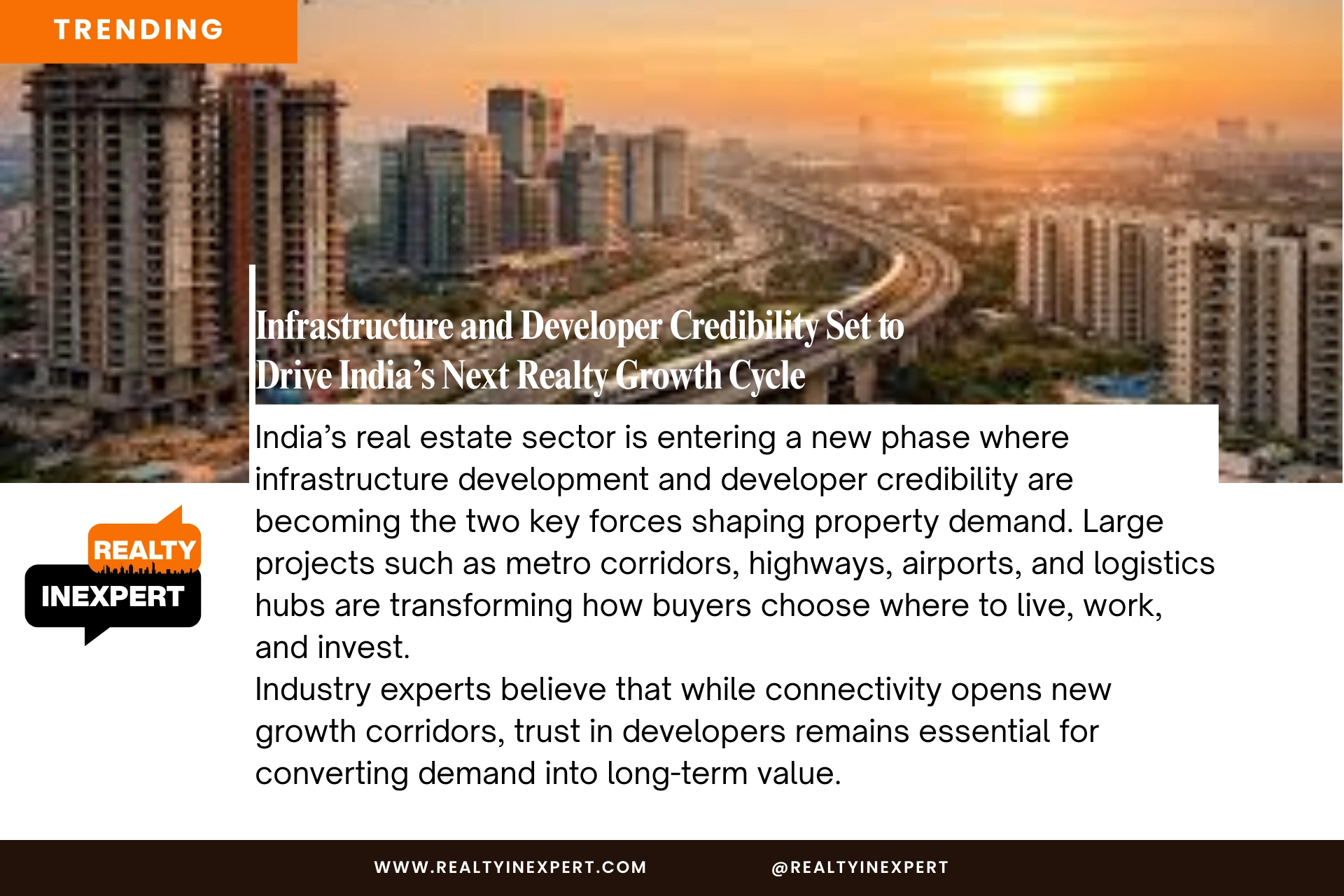
India’s real estate sector is entering a new phase where infrastructure development and developer credibility are becoming the two key forces shaping property demand. Large projects such as metro corridors, highways, airports, and logistics hubs are transforming how buyers choose where to live, work, and invest.
Industry experts believe that while connectivity opens new growth corridors, trust in developers remains essential for converting demand into long-term value.
Infrastructure Emerging as the New Real Estate Catalyst
Across India’s major cities, infrastructure expansion is increasingly influencing the rise of new real estate hotspots. Improved connectivity through metro networks, expressways, and airport developments is unlocking previously overlooked areas and turning them into thriving residential and commercial markets.
According to projections from Cushman & Wakefield, India’s real estate sector is expected to see strong expansion in the coming years. The report estimates around 5.9 million square feet of new mall supply by 2026, with a large portion consisting of premium Grade A+ retail developments.
Cities such as Bengaluru, Chennai, Mumbai, and Hyderabad are expected to witness significant retail expansion as developers respond to the growing demand for modern shopping destinations.
Residential real estate is also benefiting from this infrastructure push. As connectivity improves, developers are launching housing projects in emerging corridors that were earlier considered too far from city centres.
Connectivity Alone Is Not Enough
While infrastructure development is creating new opportunities, experts stress that it cannot sustain property value on its own.
Niranjan Hiranandani, Chairman of Hiranandani Communities, believes connectivity plays a vital role in stimulating demand but must be supported by strong developer credibility.
Infrastructure projects such as logistics hubs, airports, and metro lines bring economic activity and accessibility to a location. However, buyers ultimately depend on trusted developers to ensure timely project delivery and high construction quality.
According to Hiranandani, the combination of connectivity and credibility is what truly drives long-term property value.
Integrated Townships Reflect the Changing Model
One real estate format that clearly reflects this balance is the integrated township model.
Large master-planned developments combine residential housing with offices, retail spaces, educational institutions, and recreational amenities. When supported by strong infrastructure links, these townships function as self-sustaining urban ecosystems.
Developers with strong brand reputation are able to leverage infrastructure growth to build long-term communities rather than standalone projects.
As infrastructure improves accessibility, developer-led planning and community development help maintain property value and livability.
Retail Real Estate Expansion
Retail real estate is also witnessing renewed momentum. The upcoming mall pipeline is expected to help address the shortage of modern retail space that emerged in recent years.
Around 76% of the new mall supply projected for 2026 is expected to be Grade A+ retail space, reflecting strong demand for premium shopping environments and experiential retail formats.
Additionally, high-street retail locations in major cities are witnessing steady rental growth as consumer spending continues to recover and expand.
Residential Market Expected to Stay Strong
India’s residential property market is expected to remain resilient through 2026. Several factors are driving this momentum, including rising incomes, growing demand from high-net-worth individuals (HNIs), and increasing participation from non-resident Indians (NRIs).
The mid-segment housing category is likely to dominate new project launches, accounting for nearly 52% of the total supply, while luxury and high-end housing segments continue to grow steadily.
As infrastructure expands into new urban corridors, property prices in major cities are also expected to rise gradually due to sustained demand and expanding supply.
Policy Alignment Will Be Crucial
Rapid infrastructure-led development also presents new challenges for policymakers. Balanced urban planning, efficient land use, and environmental sustainability will be critical as cities expand.
Experts believe that infrastructure expansion must be accompanied by responsible real estate practices to ensure long-term urban stability.
Encouraging sustainable construction, planned development, and better infrastructure integration will help create inclusive and resilient urban ecosystems.
A New Formula for Real Estate Growth
India’s real estate market is no longer driven by location alone. The sector is now shaped by a combination of connectivity and credibility.
Infrastructure projects may bring attention to emerging areas, but long-term property value depends on developers who can deliver high-quality projects and thriving communities.
As India’s cities continue to expand, roads and metro lines may attract buyers to new locations—but trust in developers ultimately convinces them to invest and stay.
