



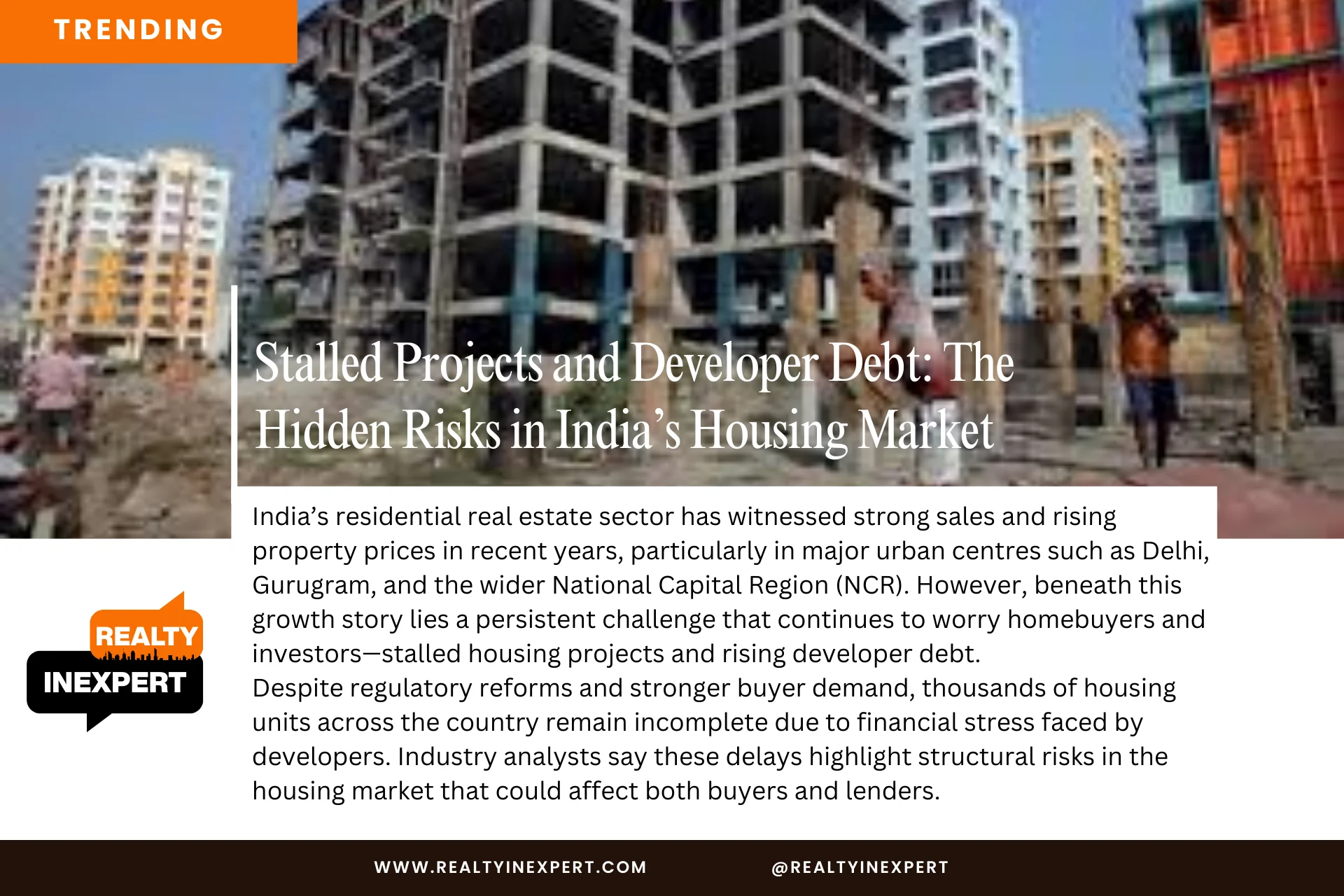
India’s residential real estate sector has witnessed strong sales and rising property prices in recent years, particularly in major urban centres such as Delhi, Gurugram, and the wider National Capital Region (NCR). However, beneath this growth story lies a persistent challenge that continues to worry homebuyers and investors—stalled housing projects and rising developer debt.
Despite regulatory reforms and stronger buyer demand, thousands of housing units across the country remain incomplete due to financial stress faced by developers. Industry analysts say these delays highlight structural risks in the housing market that could affect both buyers and lenders.
Stalled Housing Projects Remain a Concern
Across India, several residential developments have been delayed or stalled due to liquidity constraints, legal disputes, and regulatory hurdles. Many homebuyers who invested in under-construction projects are still waiting for possession years after the promised delivery timelines.
The problem is particularly visible in parts of the Delhi-NCR region, where large townships and high-rise housing projects were launched during earlier real estate booms but faced delays due to funding shortages or developer insolvency.
While initiatives such as project monitoring under the SWAMIH Fund (Special Window for Affordable and Mid-Income Housing) have helped revive several stuck projects, industry experts say the scale of incomplete developments remains significant.
Developer Debt Pressures Continue
Real estate development in India is heavily dependent on borrowed capital. Developers typically rely on bank loans, private equity funding, and advance payments from homebuyers to finance construction.
However, rising land costs, regulatory compliance requirements, and slower funding availability have increased financial pressure on developers. When projects face sales slowdowns or cost overruns, debt obligations can quickly become difficult to manage.
Financial stress has already pushed several developers into insolvency proceedings under the **Insolvency and Bankruptcy Code, leaving projects stuck in legal and financial restructuring processes.
Impact on Homebuyers
For homebuyers, stalled housing projects create both financial and emotional stress. Many families continue paying rent while also servicing home loan EMIs for properties that are yet to be completed.
In some cases, buyers also face challenges in obtaining refunds or compensation from financially distressed developers. Although regulatory frameworks such as the Real Estate (Regulation and Development) Act (RERA) have improved transparency and accountability, legacy projects launched before stricter regulations continue to face delays.
Delhi-NCR Among the Most Affected Markets
The issue of stalled projects has historically been most visible in the Delhi-NCR housing market, particularly in suburban corridors that experienced rapid expansion in the past decade.
Areas around Gurugram, Noida, Greater Noida, and Ghaziabad witnessed a surge of residential launches during earlier property cycles. However, some of these developments were affected by land disputes, funding constraints, and market slowdowns.
Although many projects have since resumed construction, industry experts believe the experience has made buyers more cautious when purchasing under-construction properties.
Banks and Investors Taking a More Cautious Approach
Financial institutions and real estate investors are also becoming more selective in project funding. Lenders now conduct stricter due diligence on developer balance sheets, project approvals, and sales performance before approving financing.
This shift has encouraged developers to focus more on phased construction, transparent funding structures, and faster project delivery, helping restore confidence in the housing market.
Market Moving Toward Greater Discipline
The Indian real estate sector has undergone major regulatory changes over the past decade, including the introduction of Real Estate (Regulation and Development) Act, improved escrow mechanisms, and stronger consumer protection rules.
These reforms are gradually pushing the industry toward greater financial discipline and transparency.
However, analysts say the long-term health of the housing market will depend on better project financing models, responsible land acquisition, and stronger developer balance sheets.
Outlook
Despite the challenges posed by stalled projects and developer debt, demand for housing remains strong in major urban markets such as Delhi-NCR. Infrastructure development, job growth, and urban migration continue to drive residential demand.
For homebuyers, the key lesson is to carefully evaluate developer credibility, project approvals, and financial stability before investing in under-construction properties.
As the market evolves, industry experts believe that stronger regulation and more disciplined development practices will help reduce risks and build a more stable housing ecosystem for the future.
